When we talk about advertising on marketplaces, it’s impossible not to think of Amazon. Sponsored Products, Sponsored Brands, display campaigns… all of this is part of Amazon Ads, the advertising ecosystem that Amazon has been building for years and that has changed the way brands compete for visibility within its platform.
But it's no longer just about Amazon. Leroy Merlin, Brico Depôt, MediaMarkt, Carrefour, ManoMano, Miravia, or AliExpress They also have their own solutions for promoting products and gaining visibility over competitors, so the landscape for brands and sellers is becoming increasingly attractive: not only can we establish a presence on new sales channels, but we can also use advertising to reach consumers right when they’re deciding what to buy.
And that is where the true value of these platforms lies: retailers and marketplaces have something that few advertising channels can offer, users who are showing clear signs of intent to purchase.
Someone looking for TVs at MediaMarkt, tools at ManoMano, or bathroom furniture at Leroy Merlin is clearly indicating what they're interested in at that very moment. This is what we call Retail Media: Leveraging Your Own Spaces, Audiences, and Data retailers' efforts to connect brands with consumers within (and, increasingly, outside of) the shopping environment.
In fact, the data confirms the significance of this model in Spain: according to the study presented by The New Retail, Investment in Retail Media reached 873 million euros in 2024, with year-over-year growth of 17.61% in Q3, and projections indicate that it will exceed 1.28 billion in 2026, at an annual growth rate of approximately 22%. This is no minor trend; it is already one of the fastest-growing segments of advertising spending in the country.
From Being on a Marketplace to Gaining Visibility
Open an account on a marketplace and Publishing the catalog does not guarantee that our products will be seen. Let's consider a search for «shower screen» on a marketplace specializing in DIY: the user may come across hundreds or thousands of similar listings, and price, reviews, relevance, availability, shipping terms, and the quality of the product listing all influence which ones ultimately stand out.
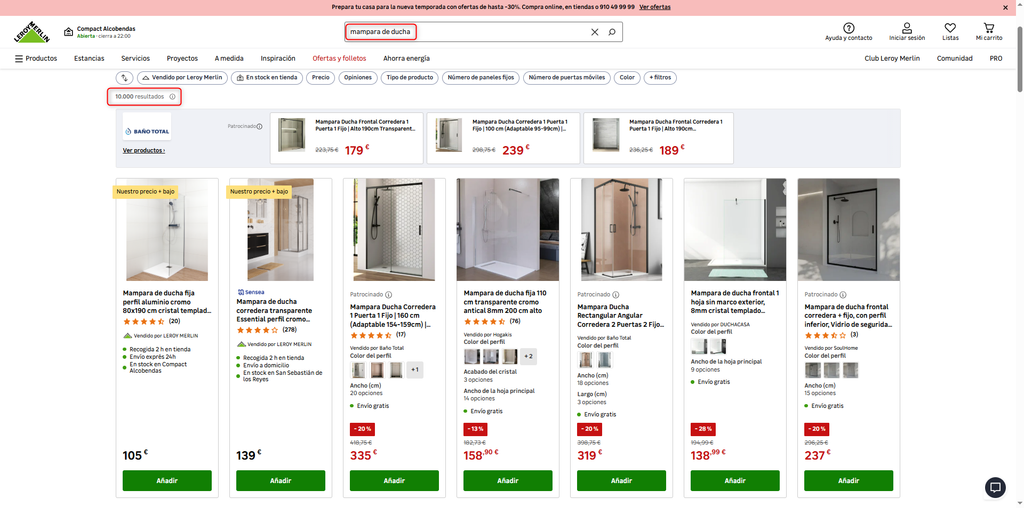
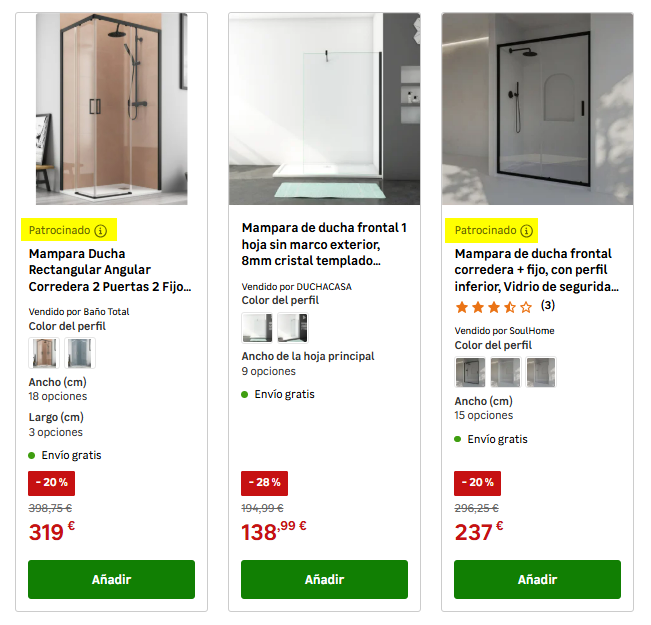
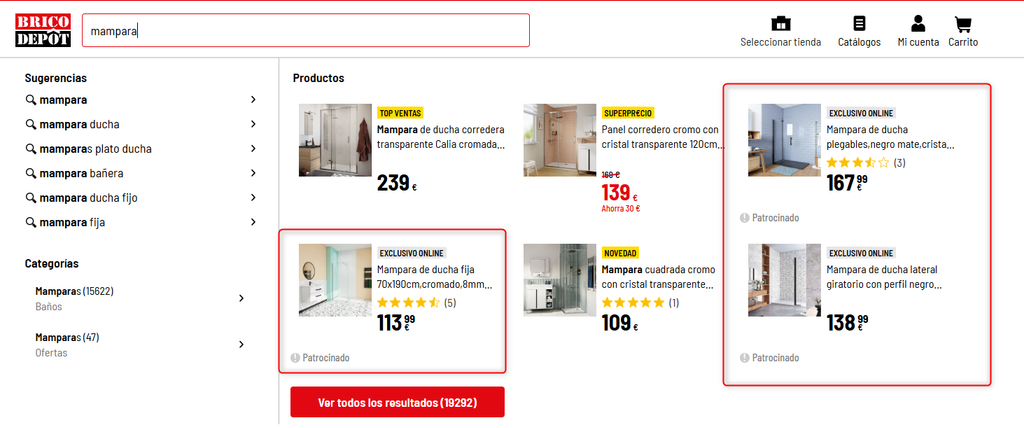
There is, however, another way to gain that visibility: sponsored products. Each marketplace has its own tools and unique features, but the principle is the same: the seller invests to ensure that certain products appear in prominent locations within the platform. In other words, we’ve moved from relying solely on organic search results to being able to incorporate a paid visibility strategy within the marketplace itself.
The Big Advantage: Purchase Intent
Here we find one of the main differences compared to other advertising environments. Let’s imagine a user searches for «18V cordless drill»: it’s not the same to show them an ad while they’re browsing a website or checking their social media as it is to show you a sponsored product while you're searching on Leroy Merlin or ManoMano.
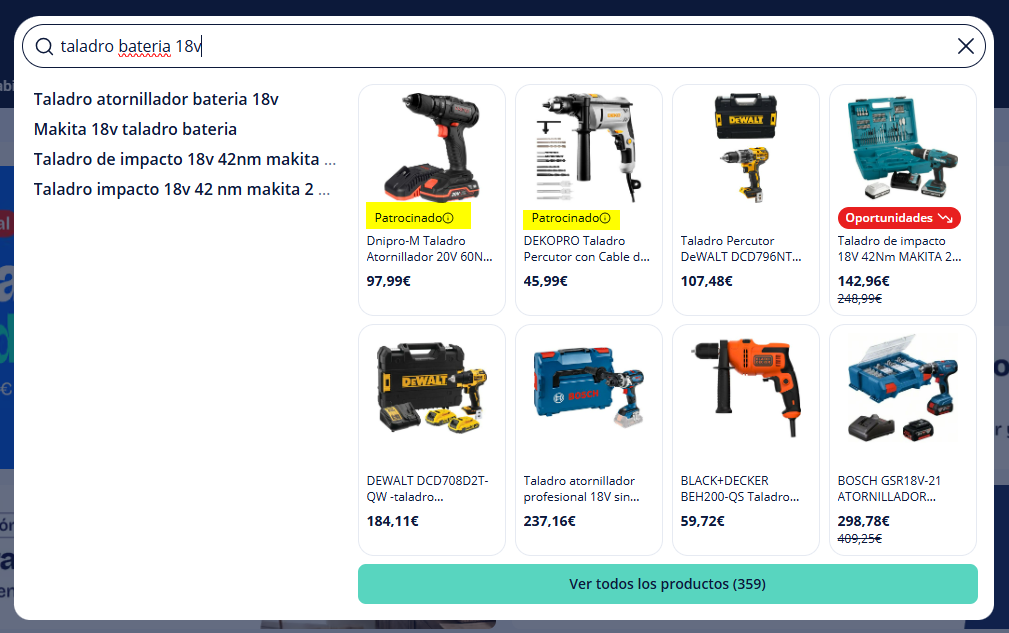
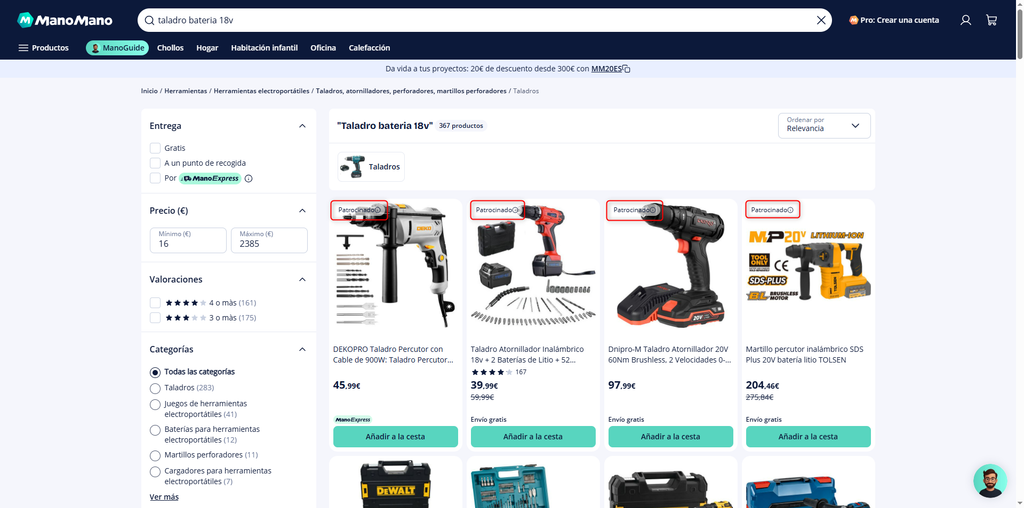
In the second scenario, we already know something very important: there is an intention to purchase. The user has voluntarily visited a specific website, is looking for a particular category or product, and is likely comparing options before making a decision. Advertising therefore appears at a very late stage in the purchasing process, and that is one of the great strengths of this type of advertising: it gains visibility just when the consumer is deciding what to buy.
However, the way this advertising is managed isn't the same across all marketplaces, and this is something we notice on a daily basis:
- On some platforms, it is we, as an agency, who We manage our clients' campaigns directly, with full control over bids, negative terms, and the pace of investment
- Whereas in others, the Advertising spending is handled by the marketplace's own Retail Media team, which usually results in slower approval processes and less room to make adjustments along the way.
This difference It has a significant impact on how a strategy is planned and what level of agility can be expected from each platform.
How can advertising contribute to a marketplace strategy?
The most obvious answer is «greater visibility,» but a well-planned advertising strategy can achieve several goals at once.
Gaining a foothold in highly competitive categories
One of the main challenges when it comes to sell on marketplaces is the number of available options: We may have a great product, a complete product listing, and a competitive price, and yet still fall short of the top spots. Sponsored products allow us to close that gap and gain more visibility.
Promote new products
A newly launched product does not yet have a sales history or reviews to help it rank organically. Advertising can be the key to generating initial visits and sales, in addition to obtaining real data on how consumers respond: Does it generate clicks? Does it convert? Is the price competitive compared to other products?
Promote strategic products
There's no need to promote the entire catalog. Bestsellers, high-margin items, exclusive products, or particularly competitive items They tend to be the best candidates for additional investment, always prioritizing those where greater visibility actually translates into business.
Capitalizing on Major Sales Opportunities
Black Friday, Christmas, sales, or our own promotional campaigns on each marketplace generate spikes in demand. Combining a strong product offering with increased advertising presence helps the product stand out just when competition to attract consumers is heating up.
What will the user see when they click?
Before increasing the visibility of a product listing, it's a good idea to ask yourself this question. We can drive traffic to a product, but it will be much harder to convert that traffic into sales if it has unattractive images, an incomplete description, out of stock, high shipping costs, poor reviews, or a price that's much higher compared to similar alternatives.
Let's imagine we're promoting a shower screen for 249 euros while other sellers are offering comparable models for 179 euros: advertising can get more people to see it, but Investing in advertising does not automatically make a product competitive.
That is why, in Geotelecom We also support that initial phase: we analyze which products have real potential, where it makes sense to invest, and how to turn visibility into profitable sales—not just clicks. Because The ultimate goal isn't to appear more often, but to be there at the exact moment when the consumer stops browsing and starts deciding what to buy.