
Advertising has always reflected, to a greater or lesser extent, the society in which we live. For decades, advertisements have built and reinforced certain stereotypes that we have all seen at one time or another: gender roles, unrealistic bodies, or lifestyles that are not very diverse..
However, in the 21st century something has changed. Brands no longer communicate the same way, and consumers no longer think the same way. Today, advertising is in a constant process of transformation, The company has been driven by factors such as social networks, diversity and a much more critical audience.
But have stereotypes really disappeared or have they simply evolved?
What are stereotypes in advertising?
When we talk about stereotypes in advertising, we refer to simplified and often unrealistic representations of certain groups of people.
For years, these stereotypes have been very clear:
- Women associated with the household
- Men in roles of power or work
- Models with “perfect” bodies”
- Traditional families as the only valid model
The problem is not only that these images are repetitive, but that they end up influencing how we perceive reality. Advertising not only sells products; it also transmits values, ideas and ways of seeing the world.
How have they evolved in the 21st century?
In recent years, the change has been evident. Brands have started to move away from the more classic stereotypes and to bet on a more inclusive and realistic communication.
Today we see:
- Greater diversity of bodies, ages and profiles
- Broader representations of gender
- Less traditional families and lifestyles
- Closer and more human messages
This change has not come about by chance. Consumers are now much more demanding and quickly detect when a brand communicates in an artificial or inauthentic way.
In addition, the social networks have played a key role. They have given a voice to users, who can give their opinions, criticize and viralize campaigns in a matter of hours. This has forced brands to be more careful and conscious with their messages.
The role of social networks in this change
Social media has completely transformed the way advertising is created and consumed.
Before, brands controlled the message. Now, the conversation is bidirectional. Users participate, give their opinions and, in many cases, set the course of communication.
This has had two important effects. On the one hand, it has driven more inclusive and real campaigns. On the other hand, it has increased the risk of rejection. when a brand falls into inaccurate stereotypes.
In this context, advertising can no longer be understood without a broader vision. Integrating these changes within a well-defined digital strategy is key to adapting to a constantly changing environment.
Examples of current stereotypes (that still exist)
Although advertising has evolved, stereotypes have not completely disappeared. They have simply changed shape.
Today we still find:
- The “perfect entrepreneur” always successful
- The ideal life shown in social networks
- Unreal bodies, although now with a more “aspirational” approach.”
- More subtle, but present, gender roles
That is, they are no longer as evident as before, but they still influence how we perceive reality.
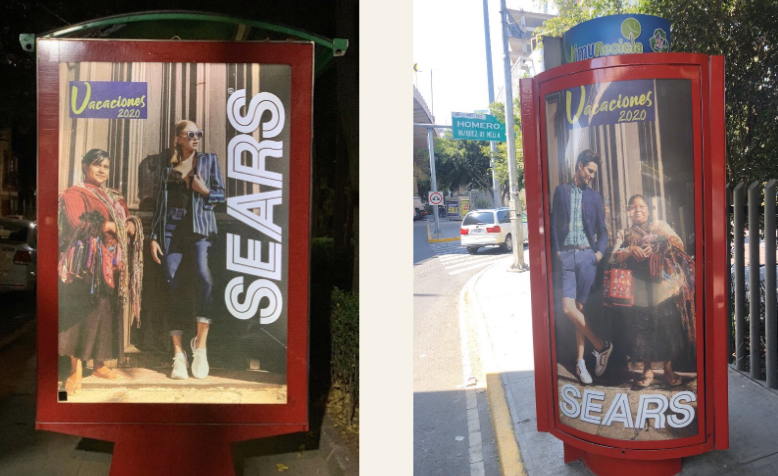
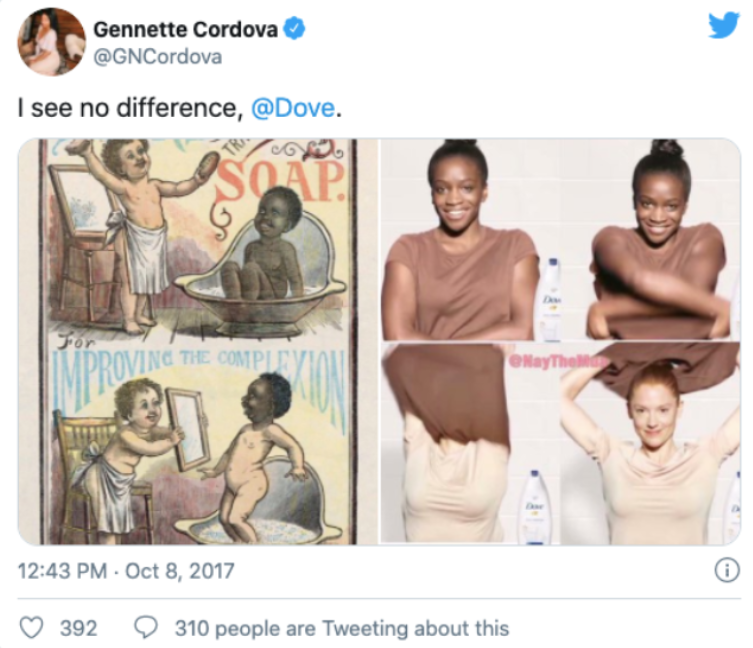
The challenge for brands: to be authentic
One of the biggest challenges today is to find the balance between connecting with the audience and not falling into forced messages.
Many brands have tried to adapt to these changes, but have not always done so well. When the Inclusion or diversity is perceived as artificial., the result is usually rejection.
Therefore, today more than ever, authenticity is key. Brands that truly understand their audience and communicate from an honest position are the ones that stand out.
Where is advertising headed?
Advertising doesn't work the way it used to. It is increasingly difficult to connect with messages that are perfect or too “pretty”, because people no longer believe them.
Today, what really works today is what is close at hand. Brands that speak like people, that show real situations and that don't try to look perfect, are the ones that connect the best.
There is also a clear shift towards more personalized communication. It's no longer about talking to everyone, but rather about say something relevant to whoever is really listening to you.
And, above all, there is a greater demand for consistency. If a brand says one thing but does another, it shows. And it pays off.
Therefore, rather than simply avoiding stereotypes, the challenge now is to communicate with meaning, with honesty and without forcing the message.. Because in the end, what makes the difference is not what you say, but how you do it.


